Ikea Hack
IKEA IVAR HACK, JONATHAN ADLER STYLE
If there was a designers work who I have always dreamt about having in my home, it’s Jonathan Adler! His signature monochrome style has played a big part in the decor around my own home as I began adding black accents to the blank white canvas of my one-bedroom flat.
I love the contrast of pops of colour against a monochrome backdrop. You may have a noticed a few not-so subtle flashes of neon appear around my home! I also love the gold embellishment used by Jonathan on his furnishings, paired with striking monochrome geo patterns, so, I decided if I can’t quite afford one of his larger pieces of homeware, I’ll try and create my own instead.
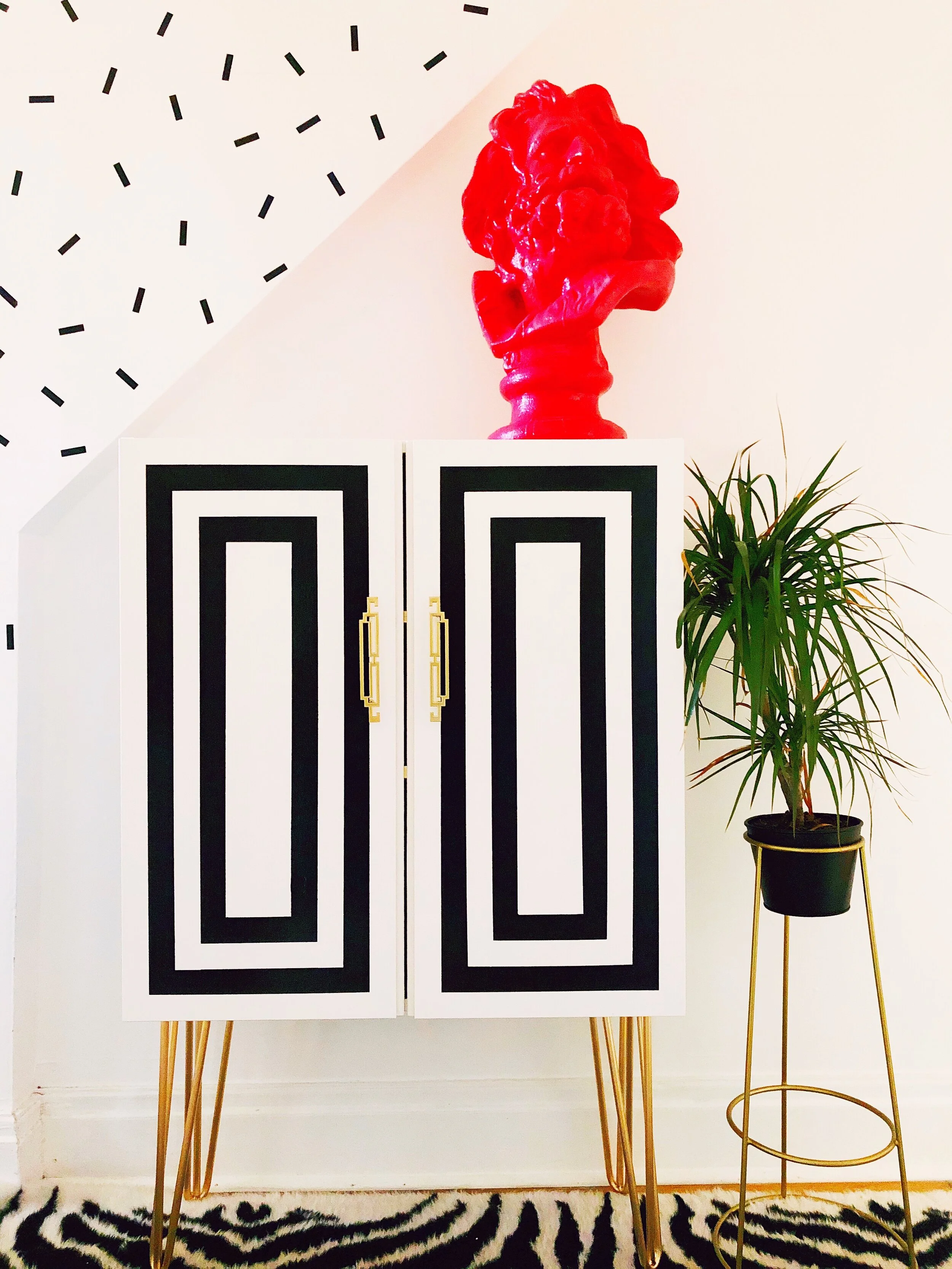
Cue the Ikea Ivar Cabinet! The Ivar is an Ikea classic that’s popular amongst keen interior lovers looking to upcycle and give it a personality if its own. It’s reasonably priced for a large solid wood unit and, with a trip to my local in the pipeline already planned, I had to pick one up and give it a go (it was also super simple to put together).
In this tutorial I’ll be talking you through how I transformed this basic wood unit into a maximalist cabinet of dreams!
WHAT YOU’LL NEED
Ikea Ivar cabinet
White satin finish paint
Black satin finish paint
Frog tape
Craft knife
Four hairpin legs
White primer spray paint
Gold spray paint
M5 Screw and bolts
Gold decorative handles
Wallpaper for inside the cabinet
Gold leaf
Gold leaf adhesive
Screwdriver
Drill and drill bits
Step 01
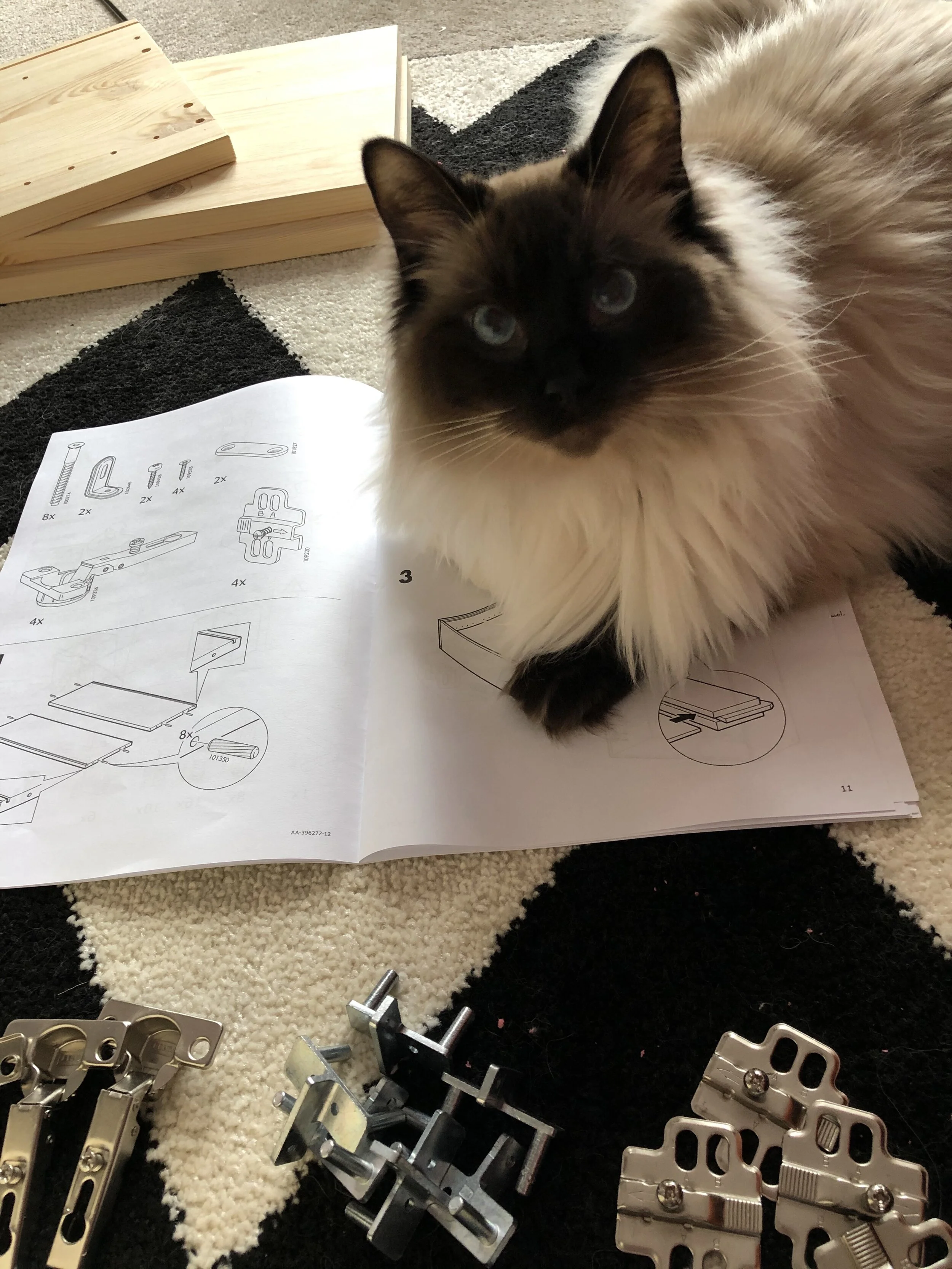
Begin by assembling the Ivar unit, it was surprisingly easy to put together, however I wasn’t prepared for the notorious ‘Ivar Gap’ which I wasn’t aware was a thing until I took to Instagram to see if anyone else had the same issue. After trying to adjust the fixing to attempt to close the gap, I spent a few days deciding whether I could live with it or not, turns out I can! But if you can’t, there are a few hacks online and even a kit you can buy that apparently closes the gap.
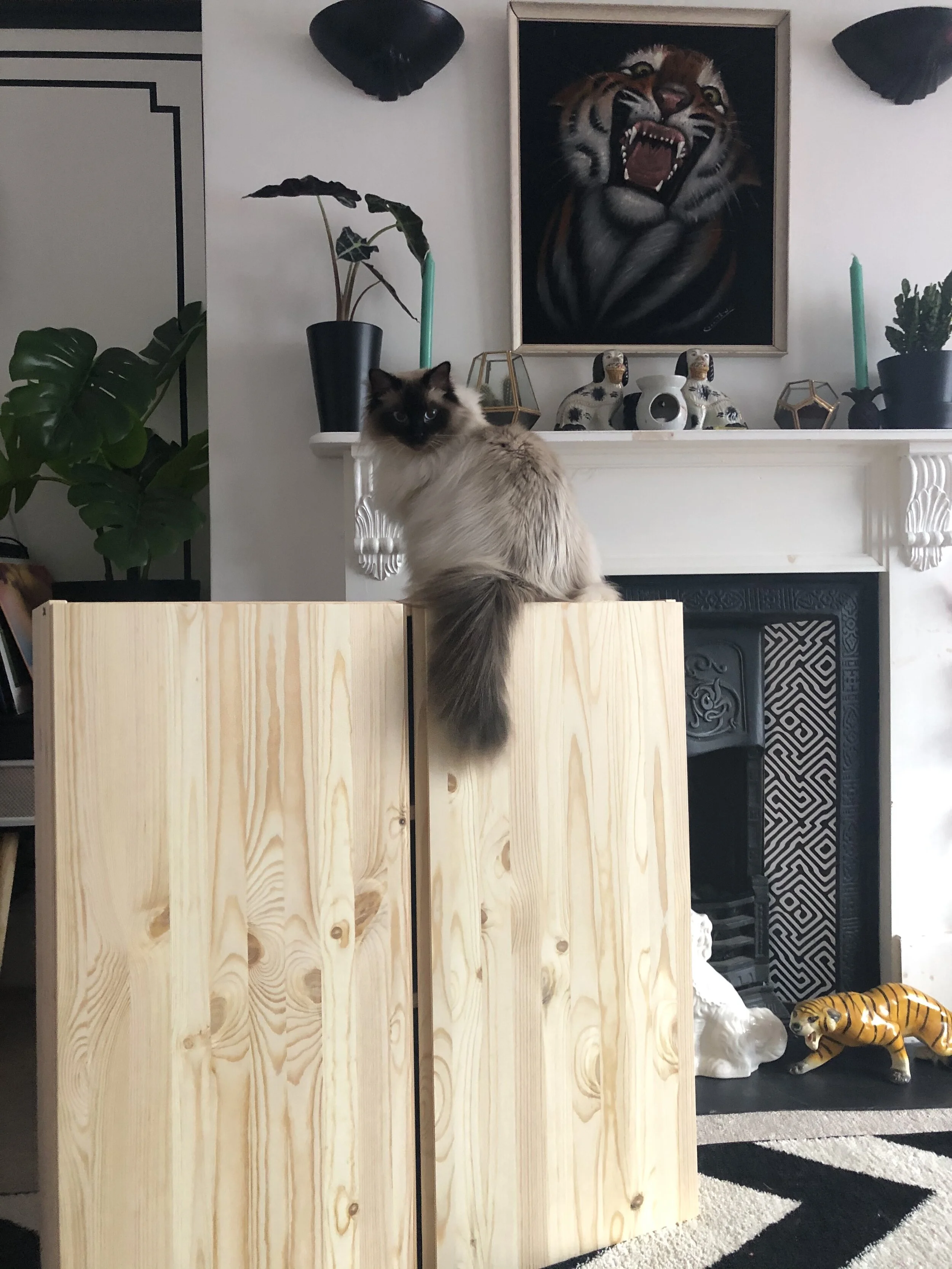
Once it was assembled, I painted the entire unit (apart from the inside) white with a satin-finish wood paint. Take note, the Ivar is untreated pine so is very absorbent. If you’re painting it a bright colour, I’d suggest priming it first, so you don’t have to use lots of paint.
Step 02
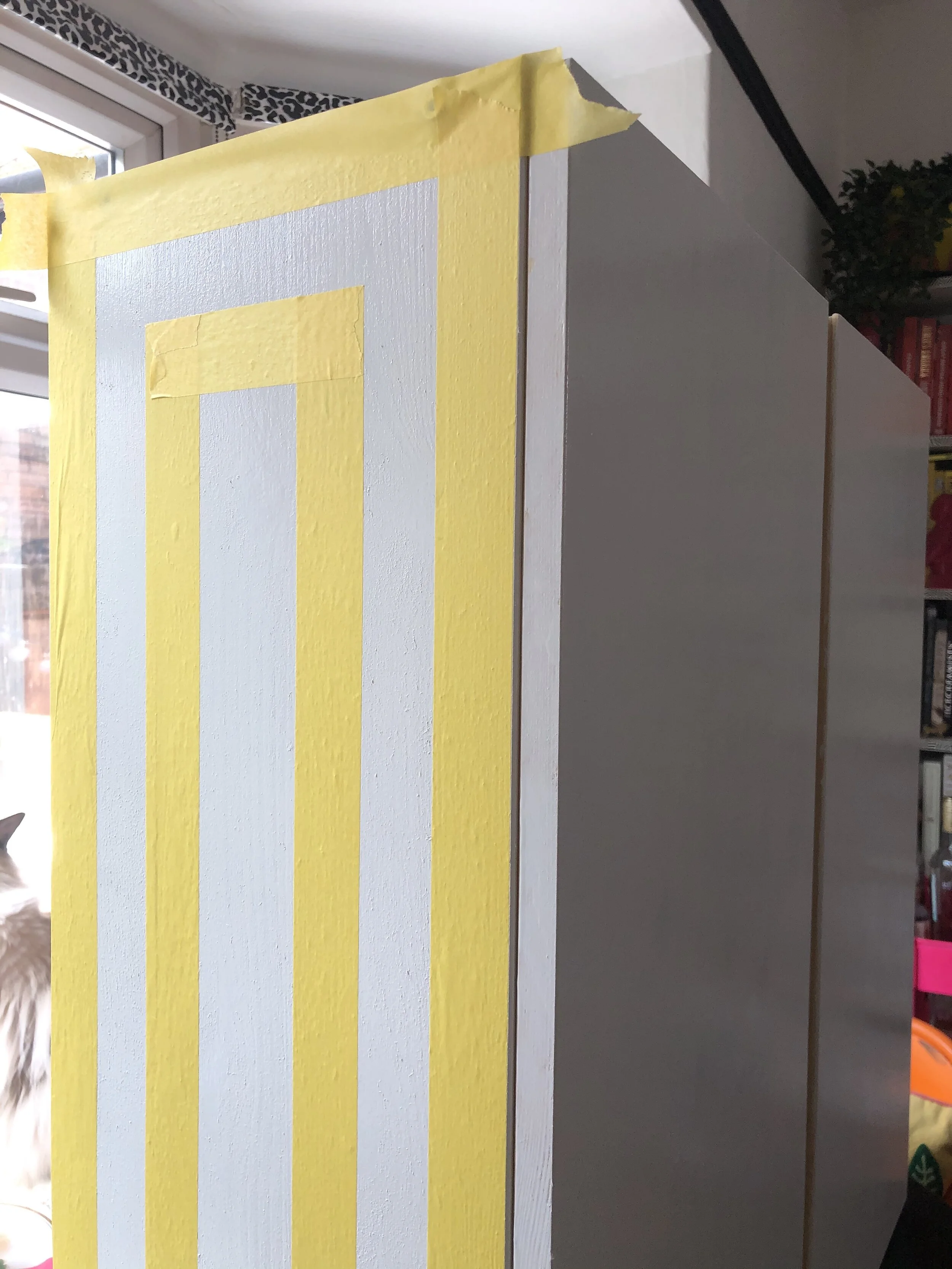
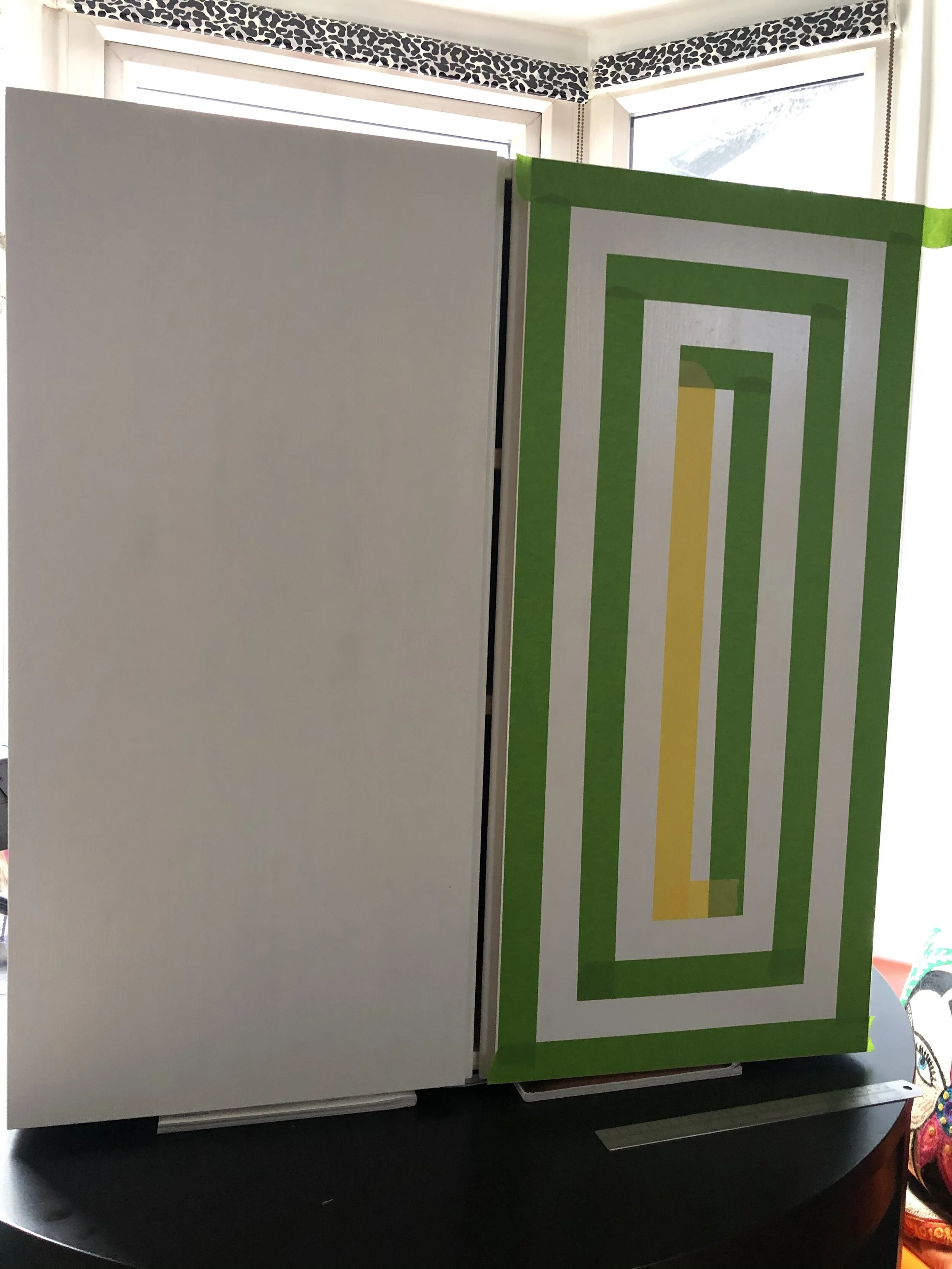
Once you’re happy with the colour of the outside and it is fully dry (this will be dependent on the paint) you can start working out how you want your pattern. Now I’m pretty lazy, and instead of using a ruler to measure out the distance and position of each pattern, I used Frog tape as a guide. I use the tape to measure and determine the distance between each pattern by using its straight edges and thickness. For this hack I created an alternate border on the two doors and on the sides. The areas I left covered in masking tape would remain white, and all the other areas would be black.
Step 03
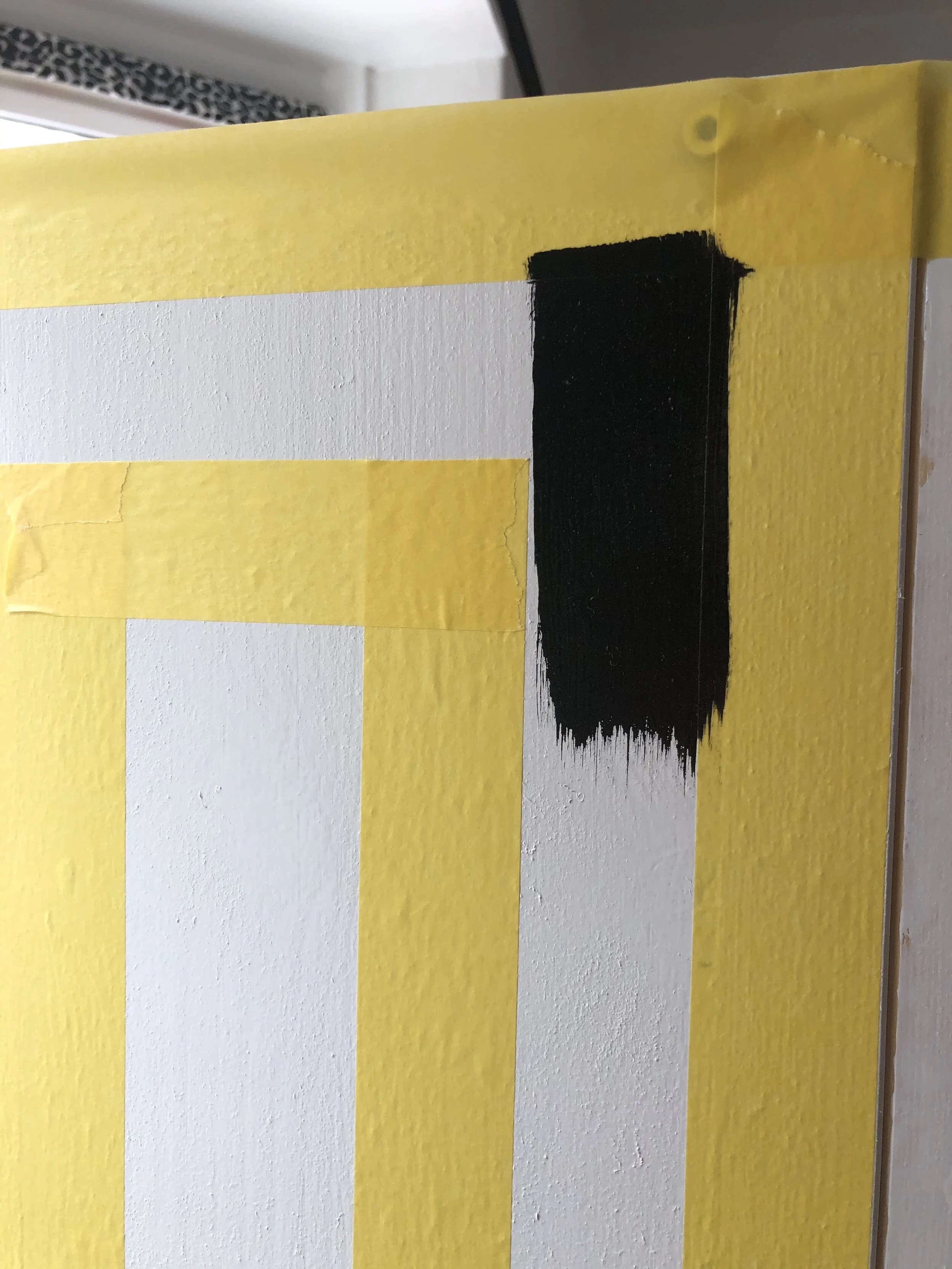
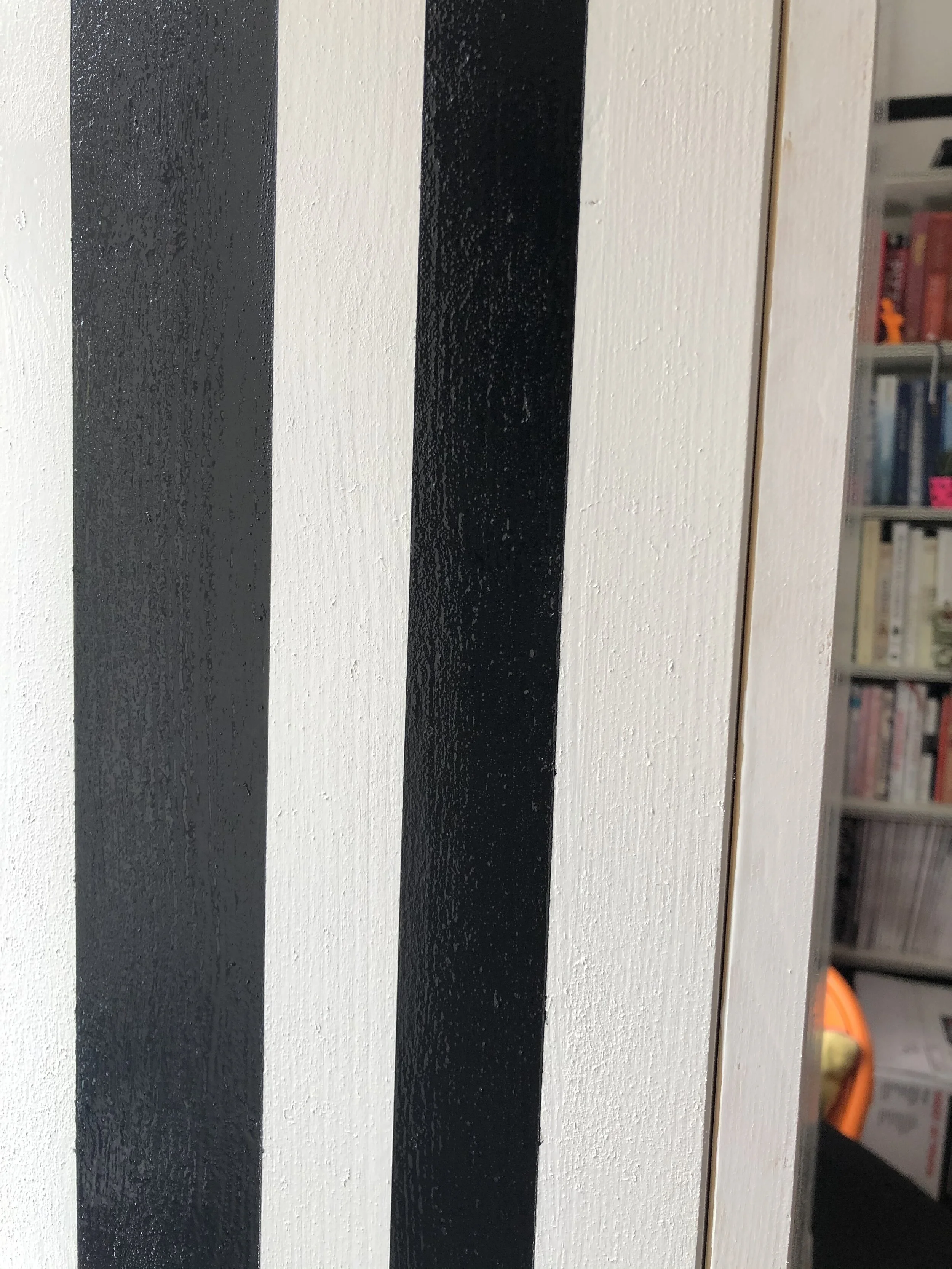
Once I’d applied the masking tape I went over the tape edges with my finger, pressing down firmly to ensure there wasn’t any chance of the paint bleeding through. I’d always recommend Frog tape for a job like this as standard masking tape always let’s paint through. I first painted over the white surface with a black satin-finish wood paint. Once the first cost had dried, I then applied a second coat, and then I removed the tape immediately. That way the tape comes off smooth and clean and won’t pull any dry paint with it. Touch up any black paint that may have bled through with a fine brush and the white paint you used for the base.
Step 04
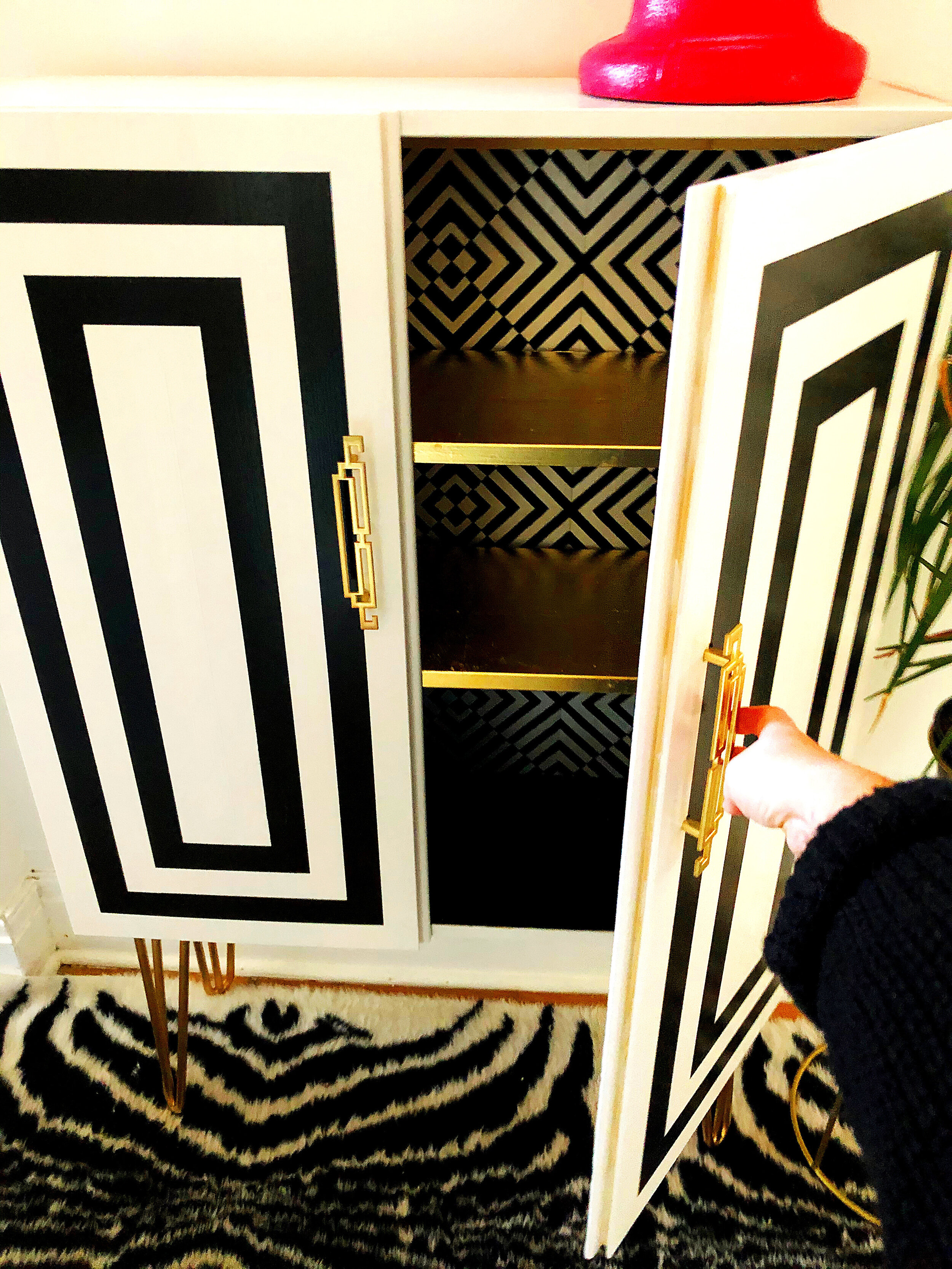
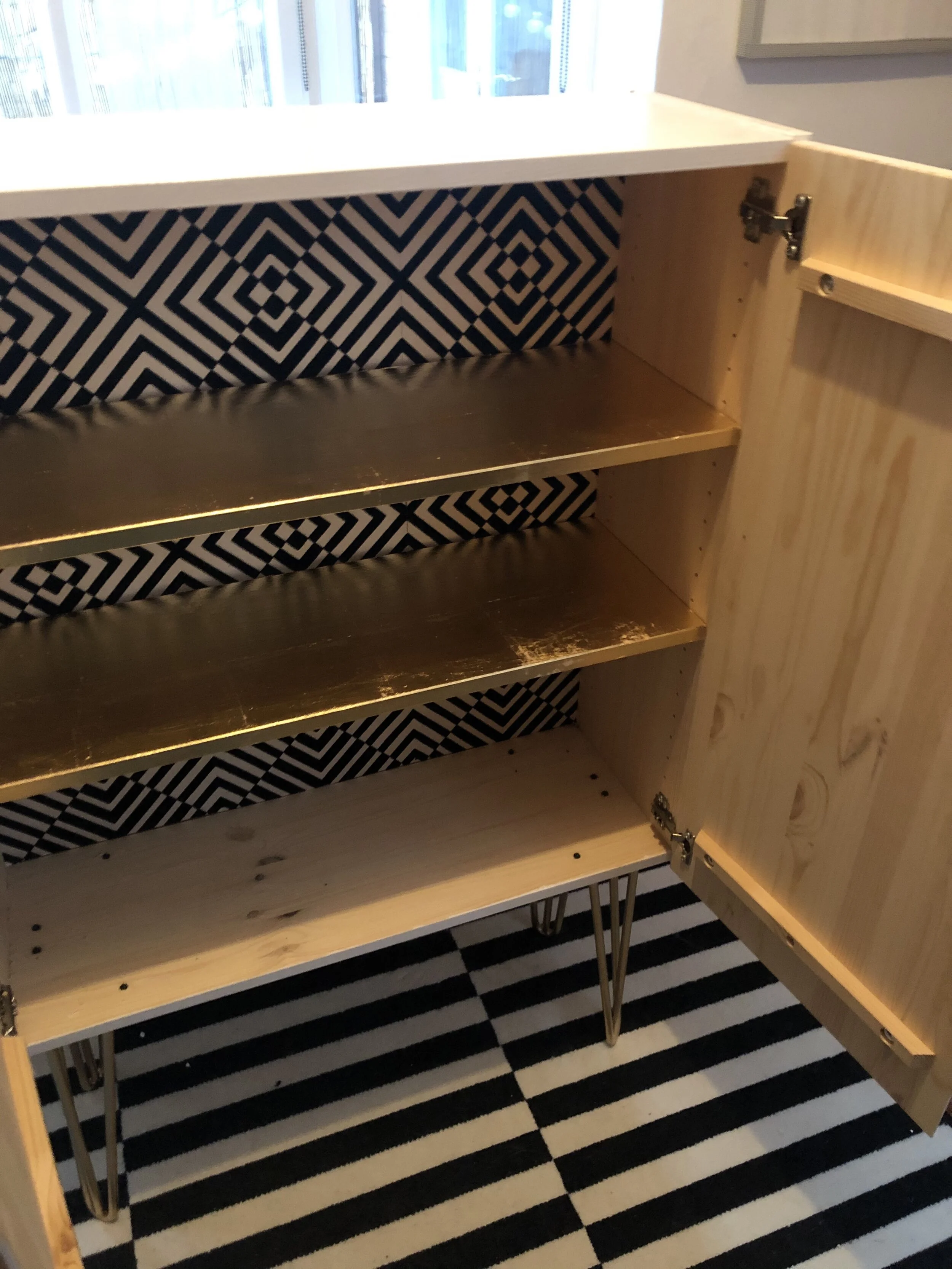
Now your outside is done, it’s time to work on the middle, I began with gold leafing the shelves. I applied a layer of Polyvine metallic leaf glue onto the top and front edge of the shelf, as that’s the only edge you’ll see, and left to dry for a few hours until the surface feels tacky as that’s when the leaf adheres the best.
Step 05
While the glue for the gold leaf was drying, I began painting the inside of the cabinet black. As the back would be covered in wallpaper, you don’t have to be too neat when it comes to going over the lines, as it’ll be covered later.
Step 06
While the paint on the inside of the cabinet dries, the glue on your shelving should have dried but is still tacky, you can then start applying your gold leaf. Once all the shelf is covered, using a dry paint brush, began brushing off any excess pieces of gold leaf until you have a smooth finish. (Optional: seal your gold leaf in with a coat of polyvine clear lacquer.) Don’t insert the draws until the very end.
Step 07
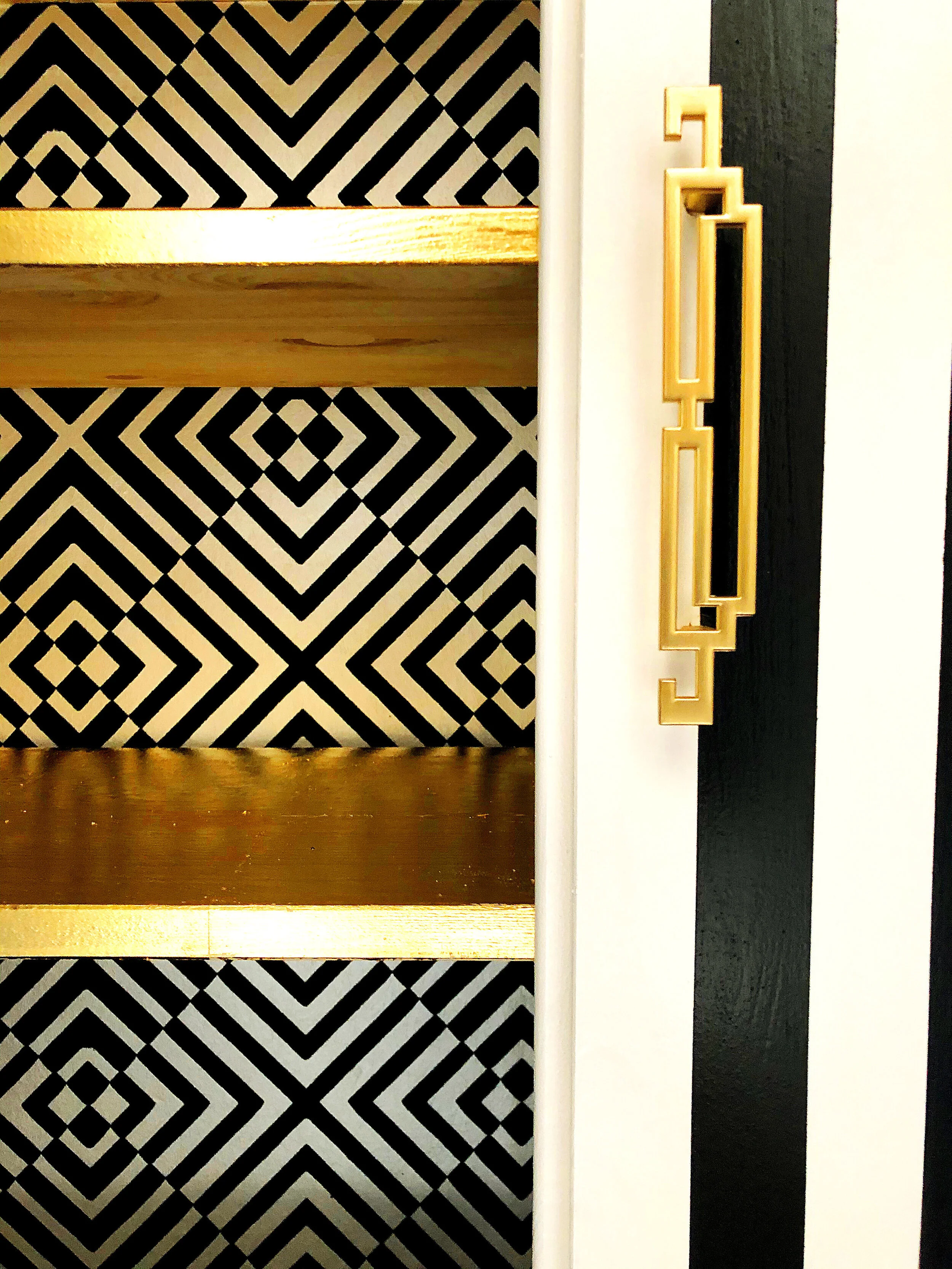
Before you install your shelves back in the unit, you’ll need to cover the back with a wallpaper of your choice. As the cabinet is quite wide, you’ll more than likely need to align two pieces of wallpaper together, so I’d advise measuring out your pieces in advance, to make sure they fit and that you’re happy with pattern. To stick your wallpaper onto the back piece, a standard PVA glue will do the job. With a large paint brush paste generous amounts of glue onto the back panel, use a smaller brush for the edges to avoid getting the glue on any paint work (although it’s not a biggie if you do, because it will dry clear anyway!). When the back panel is covered in PVA, begin to apply your pieces of wallpaper and trim off any excess with a craft knife.
Step 08
Once all your papering and painting is finished, I’d advice applying a topcoat of varnish to the outside, to protect from any chips or scuffs in the future and to give it a professional look. You can also apply a topcoat to the paint work on the inside if you wish.
Step 09
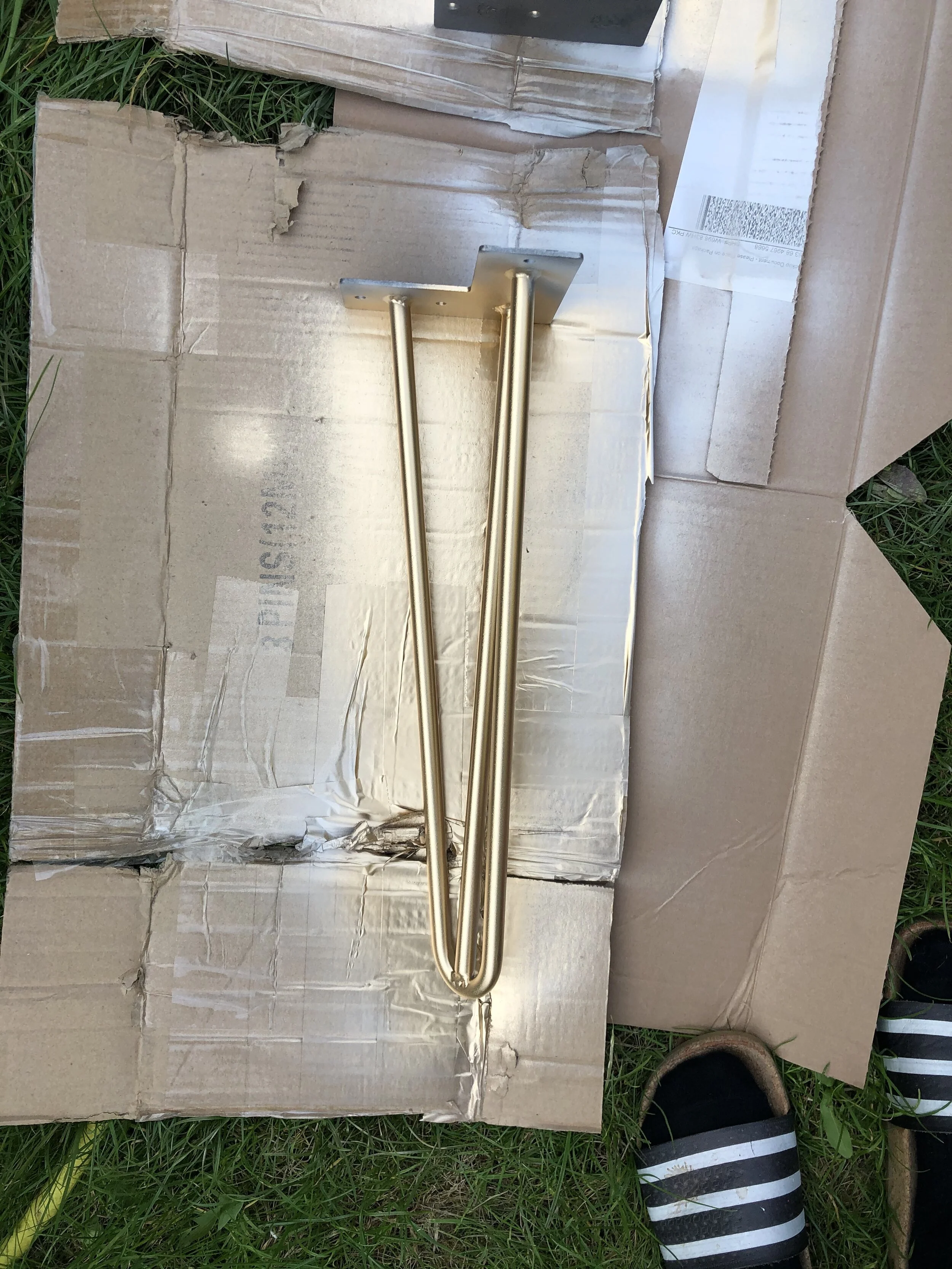
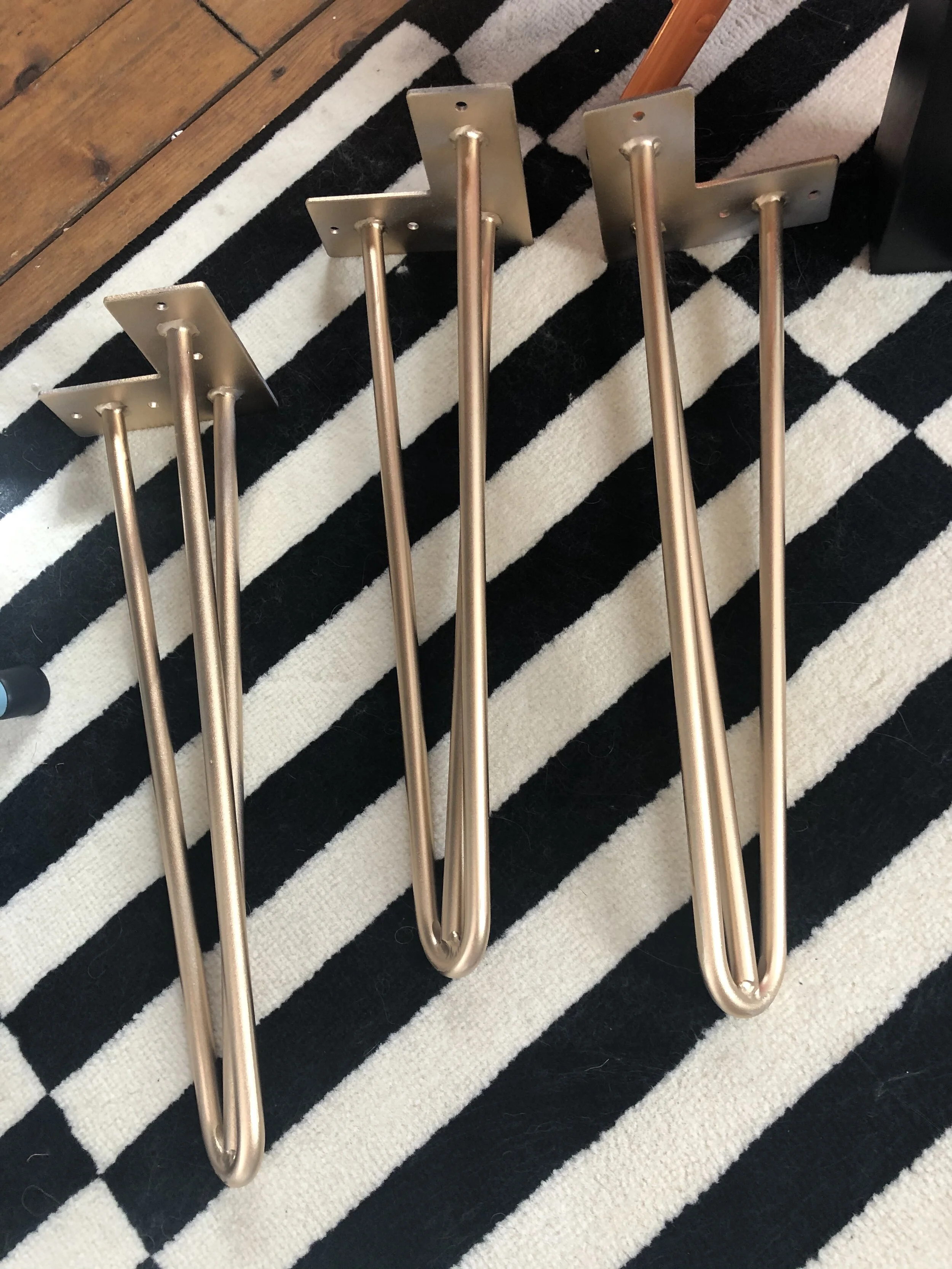
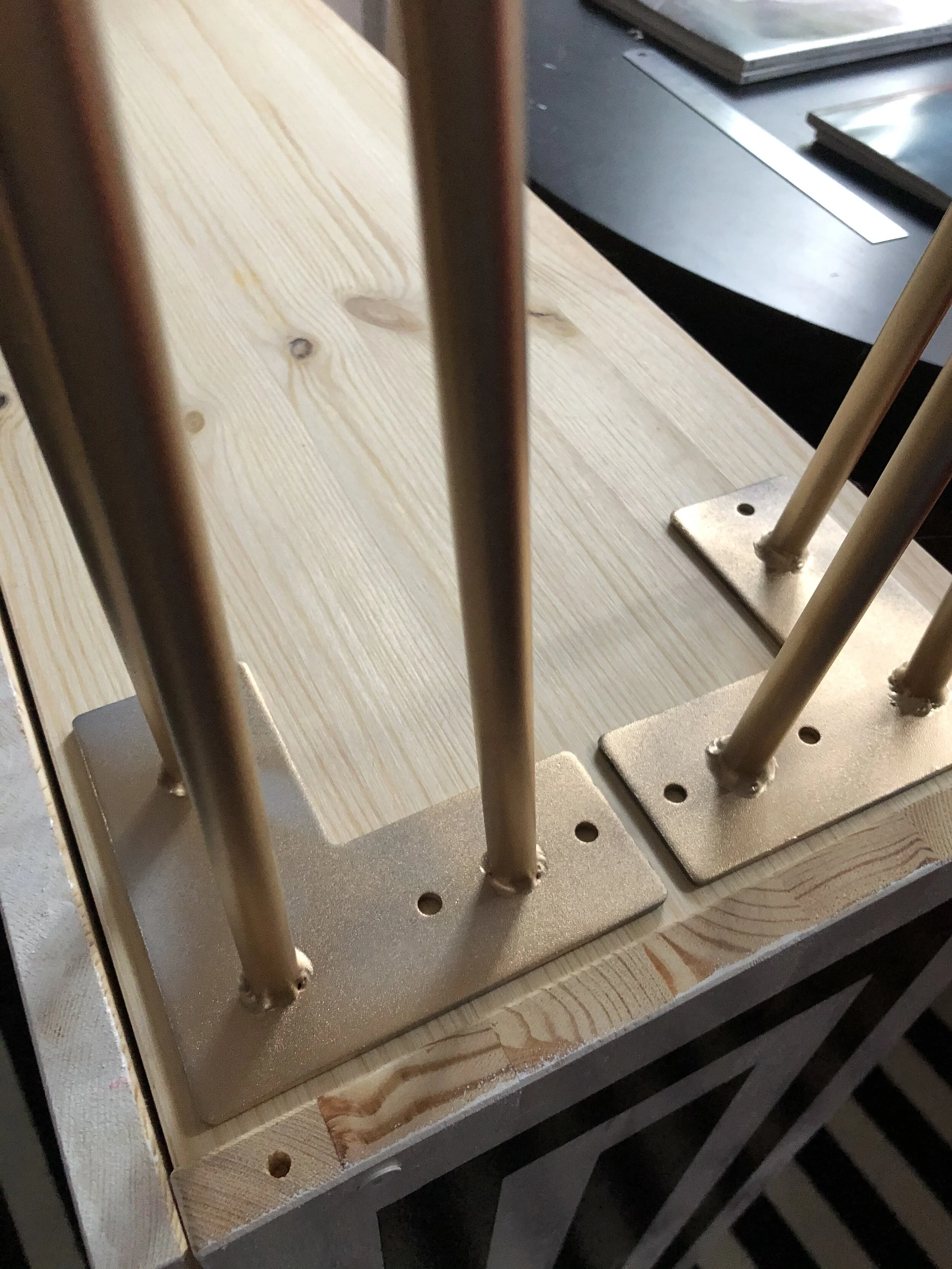
Now it’s time to add to the legs and handles! This is my favourite part, it’s like the icing on your delicious upcycled cake! I tend to keep any handles I might remove from old projects and reuse them on new projects. I like to bring them back to life by spray-painting them too! Or, if I’m feeling fancy, I’ll buy some new handles – you’d be surprised how cheap they are, I always look on eBay and Amazon. The hair pin legs I bought were chrome, so I sprayed them with a white primer and then gave them a couple of coats of gold spray paint to match the gold geometric handles I had purchased from Amazon.
Step 10
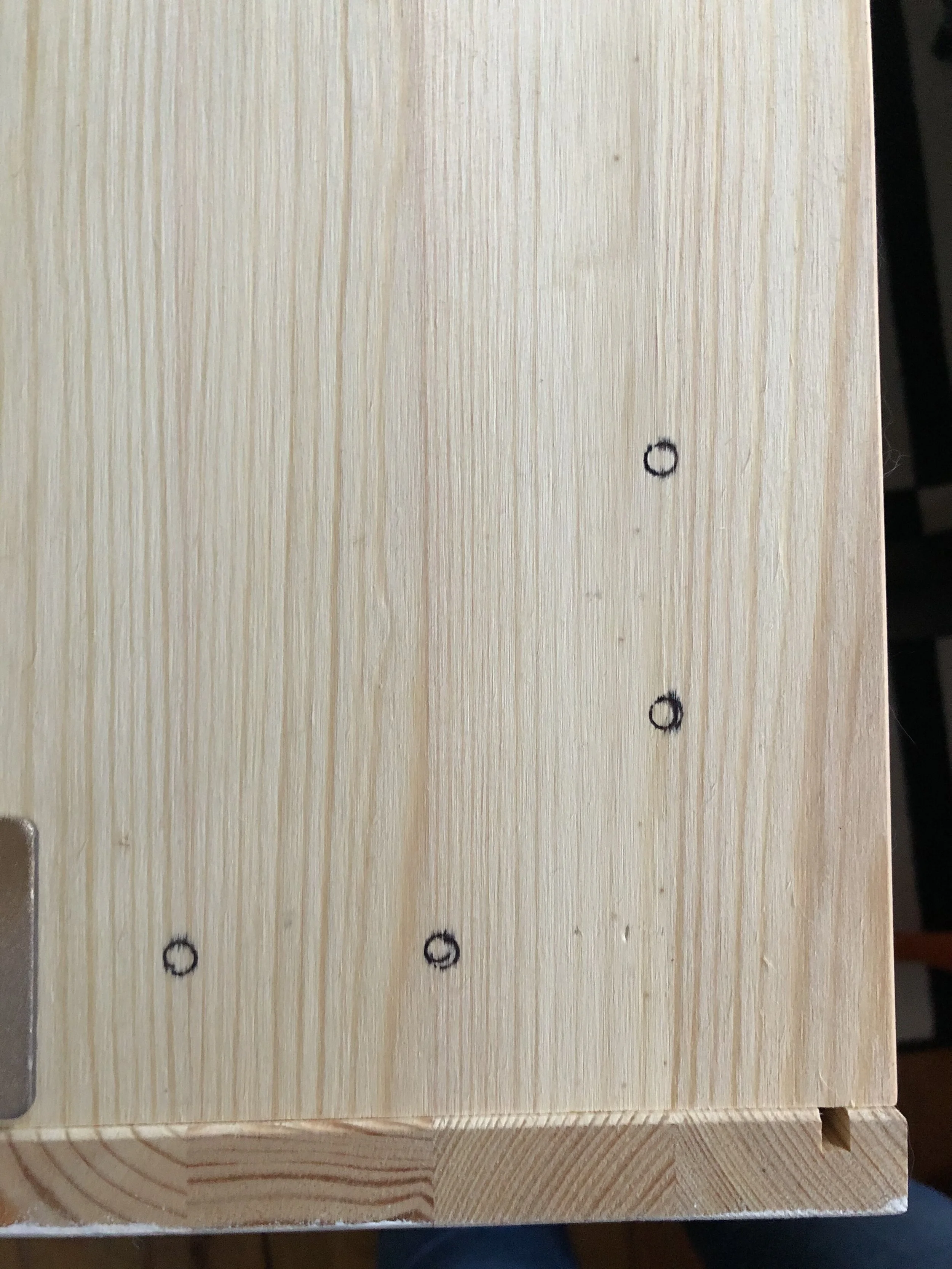
Starting with the legs, carefully turn your Ivar on its head and position your hairpin legs where you’d like them to be attached. Using a sharp pencil (it must be a sharp pencil so you can draw around the entire circle), draw around the circles of the screw holes for each leg so you know where to drill. Alternatively, you can get someone to hold your hairpin leg in place, while you lightly make a mark with the drill to show you where you need to drill the hole. Using a drill bit the same size, or slightly smaller than the hole in your hair pin legs, begin to drill in to where you have marked up with a pencil. Once your holes are drilled you can attach your legs. I used M5 size, however this depends on what size legs you use. Begin by tightening each screw loosely with your hands, and when all screws are in all four legs, tighten with an adjustable spanner.
Step 11
When attaching your handles, remember to use a ruler to accurately mark out where each handle will be, so they are straight and align perfectly. Use a drill bit the same size as your handles screw, once attached, tighten with a screwdriver.
Step 12
Flip your Ivar back the right way round and you’ll want to give the inside a good clean and get rid of all the wood that’s gathered in there with the drilling. Slot in your shelves, keeping in mind what you’ll be putting in there, so everything will fit neatly.